
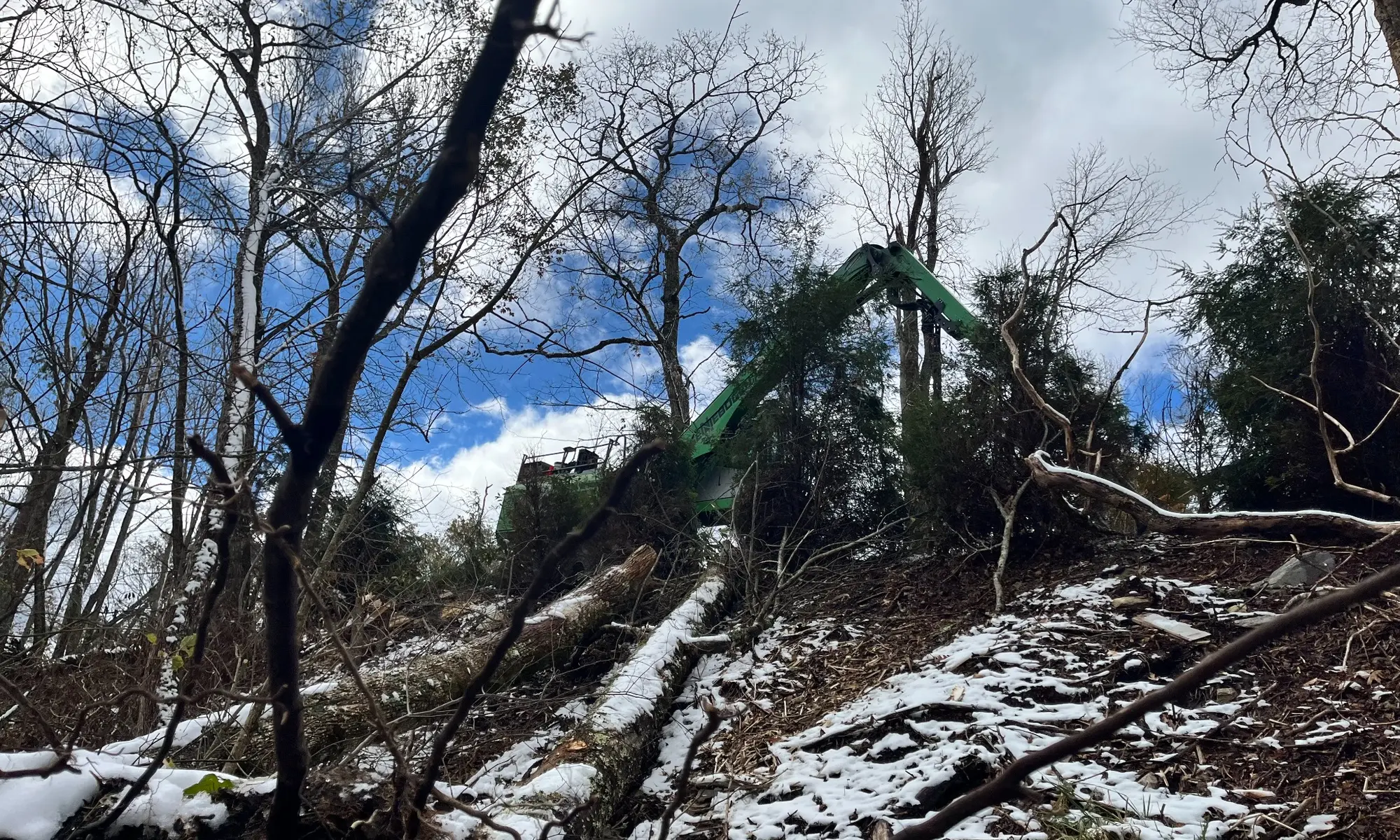
Do not confuse motion with progress.
The pressure to start cutting immediately is understandable. But an uncontrolled response can trap equipment, duplicate effort, hide hazards, and push debris into tomorrow’s problem.
The first operating period should establish priorities, routes, decision authority, communications, and a method for documenting what was found and completed.
Build the first push around access.
Critical access usually comes before complete cleanup. Emergency routes, occupied facilities, utility access, and safe equipment movement should be separated from lower-priority cosmetic work.
- Confirm life-safety and utility hazards.
- Open and protect priority routes.
- Mark unstable trees and suspended material.
- Create debris flow and staging plans.
- Record completed work and unresolved hazards.
Transition deliberately.
Initial access clearing, hazard reduction, debris processing, hauling, and final restoration are different phases. Each may require different machines, staffing, traffic controls, and records.
A disciplined transition prevents emergency rates and emergency habits from continuing after the mission has changed.